Practical sales page guide
How to write a sales page for one real offer
A practical sequence for turning a product or service into a clear first draft.
By Business Tutorials ·
Start with the decision, not the design
A sales page helps someone decide whether your offer fits their situation. Before choosing a template, write down who it is for, what they receive, what it costs and what happens after purchase. If those answers are vague, a polished layout will only make the vagueness prettier. Use one offer throughout your draft; separate unrelated products into separate pages.
Write a five-line offer brief
Complete these lines: “This is for …”; “They are trying to …”; “They receive …”; “The boundaries are …”; “The next step is …”. A fictional example: an independent consultant buys a review of one existing homepage, receives five annotated recommendations within an agreed delivery window, and implements the changes themselves. The review does not include a new website or ongoing coaching. These boundaries belong on the page.
Build the page around buyer questions
Use this order as a starting outline: opening promise; the situation you help with; the deliverable; how it works; evidence; scope and price; common questions; next step. It is an editing framework, not a guaranteed conversion formula. A complex purchase may need more explanation. A familiar, low-risk offer may need less.
Draft the opening in plain language
Name the deliverable and its purpose. “An annotated homepage review for solo consultants” is more concrete than “Unlock your limitless potential”. Follow with what the buyer receives and what they must do. Read the opening aloud. If it could describe ten unrelated businesses, narrow it.
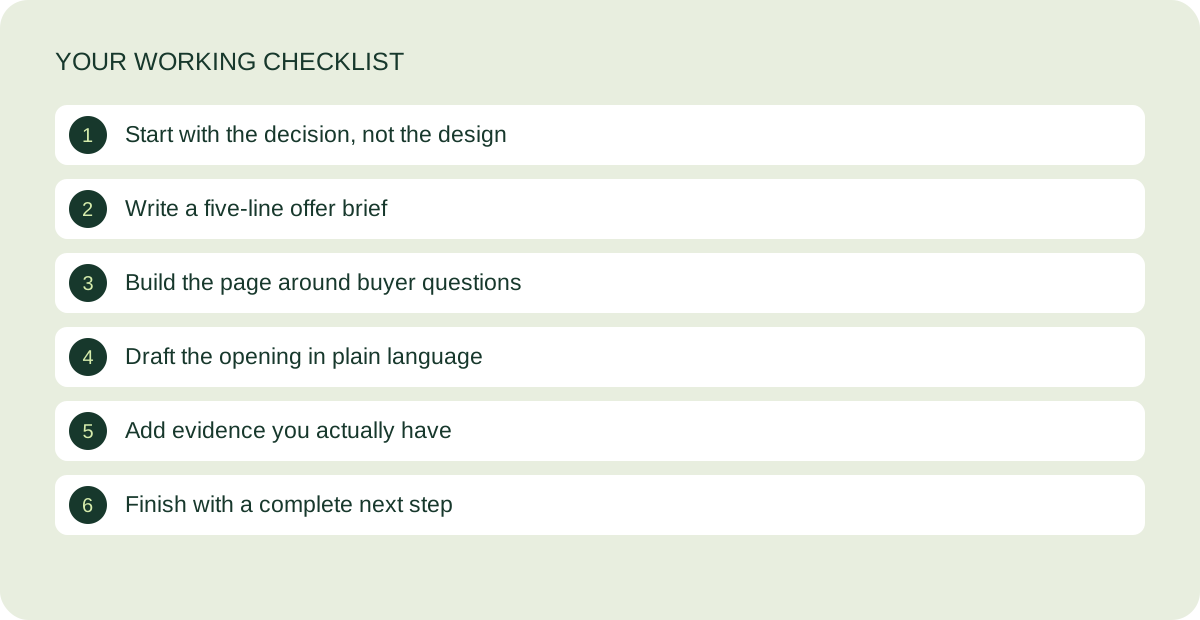
Add evidence you actually have
Use an authentic demonstration, a sample deliverable, documented experience or a customer statement you have permission to use. Label fictional teaching examples clearly. Do not turn an illustrative before-and-after into a measured result. If you have no testimonials, explain the process and show the work rather than inventing social proof.
Finish with a complete next step
Say what the button does: download a kit, request a review or buy the workshop. Put the price, delivery expectations and relevant terms where the reader can find them before paying. Check the page on a phone and follow every link. Your first milestone is a complete, accurate draft; performance can only be evaluated once people use it.
The guided video workshop is in preparation. Start with the free kit while the lessons and customer journey are being completed.
Keep working on your page
A sales page template for a small service business
Use seven buyer questions to explain a service without filling the page with generic claims.
Read the guide ↗
How to write a clear sales page headline
Three drafting patterns, with examples and a simple accuracy check.
Read the guide ↗